


Due to gender and genetic characteristics of the structure and function of the body, varicose veins are considered a more “female” disease that more often affects the fairer sex than men.The pathology is accompanied by pain, swelling and other unpleasant symptoms;In addition to the legs, it can also affect other organs and endanger the woman's health.Therefore, it needs to be treated immediately.
Reasons
The main causes of varicose veins on the legs in women are:
- prolonged wearing of uncomfortable high-heeled shoes and restrictive clothing (tight jeans, shapewear);
- overweight, obesity;
- hereditary predisposition;
- sedentary lifestyle;
- heavy physical activity;
- frequent nervous disorders;
- leg injuries;
- prolonged sitting cross-legged;
- bad habits.
A common cause of the development of varicose veins of the lower extremities and pelvic organs is hormonal imbalance, which manifests itself when:
- pregnancy, birth;
- Menopause;
- menstrual irregularities;
- Taking hormonal medications (e.g. contraceptives).
Venous congestion in the pelvis is also manifested by:
- long-term inflammatory process;
- regular interruption of sexual intercourse for a long period of time, especially without orgasm;
- frequent constipation;
- abortions;
- difficult birth;
- flexion or prolapse of the uterus;
- Pelvic tumors.
Sign
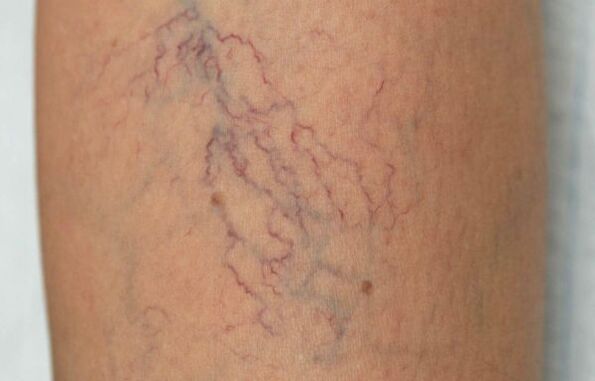
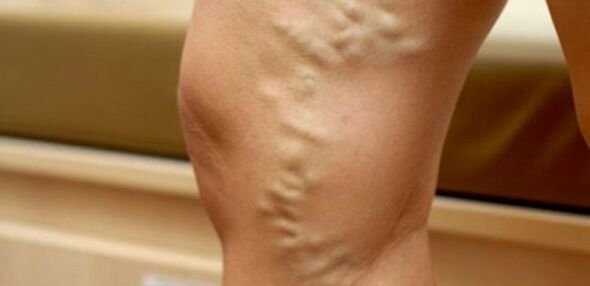
The first symptoms of enlarged veins of the lower extremities:
- Fatigue;
- Feeling of heaviness in the legs that worsens in the evening;
- burning and swelling;
- the appearance of spider veins and blue mesh.
Without treatment, patients face:
- night cramps;
- Itching of the skin in the affected areas.
In the advanced stage, other signs appear:
- Pigment spots concentrated in the lower third of the leg;
- Cyanosis (blue discoloration of certain areas of the skin);
- sclerotic changes in the subcutaneous tissue.
Varicose veins of the pelvic organs and uterus are characterized by specific symptoms:
- severe constant or intermittent abdominal pain that may become more intense after ovulation or during menopause;
- menstrual disorders (dysmenorrhea);
- vaginal discharge (white or colorless);
- sensitivity of the vaginal mucosa;
- pain during sexual intercourse;
- Pressure, feeling of heaviness in the pelvic area;
- Difficulty urinating (in rare cases);
- swelling of the vulva, vagina;
- Venous nodules on the buttocks and perineum.
The intensity and type of manifestations are individual.Some women may only experience 2-3 symptoms, while others may experience all of the above symptoms.
Why is it dangerous?
Treatment of varicose veins should be timely, as the disease can cause complications and unpleasant consequences:
- Eczema or trophic ulcers of the legs due to tissue malnutrition.
- Dermatitis on affected areas of the legs.
- Formation of blood clots due to congestion of blood in the veins.
- Thrombophlebitis.
- Pulmonary embolism.The detached thrombus enters the pulmonary artery via the bloodstream, threatening a person with a pulmonary infarction or sudden death.
Disease of the uterus negatively affects the functioning of the endocrine system: in the advanced stage, there is a decrease in the level of female hormones and dysfunction of the ovaries, which leads to menstrual irregularities.This process often leads to problems with conceiving and bearing a child, including infertility.
Pathological expansion of the veins of the pelvic organs is also dangerous:
- uterine bleeding;
- the impossibility of natural birth and the danger of spontaneous abortion;
- thrombophlebitis of the uterine walls;
- Thrombosis (blockage) of the ovarian veins.
Treatment
These include medications and physiotherapy, compression, gymnastics and lifestyle changes that help prevent the development of serious consequences and the need for surgical intervention.
Drugs
Treatment of varicose veins of the pelvic veins and lower extremities at any stage is impossible without medical support.In the initial stages it becomes the basis of the treatment, in the advanced stages it complements the package of measures.
- Phlebotonics– strengthens the vein walls, reduces the inflammatory process.
- Anticoagulants with direct and indirect effects– Dilute the blood and facilitate its movement through the vessels.To avoid complications such as bleeding, medications are used under specialist supervision.
- Fibrinolytics– dissolve blood clots that have formed and reduce blood clotting.
Taking into account the accompanying symptoms, other groups of drugs are prescribed:
- NSAIDs– Eliminate pain, relieve swelling and inflammation.
- Female sex hormone preparationswith hormonal disorders.
- Hemostatics (coagulants)– Hemostatic agents used to treat uterine bleeding.
- Antibiotics– prescribed in the presence of infectious lesions.
Minimally invasive procedures
- Sclerotherapy– Gluing the diseased vein from the inside with a special sclerosing agent to block the vessel from the bloodstream.The treated area is overgrown with fibrous tissue and gradually dissolves.
- Laser coagulation– Soldering dilated veins with a laser.
- Radiofrequency ablation– intravascular thermal effect on the vessel walls to seal the lumen.
Operation
Indicated for the development of complications of the disease and the ineffectiveness of drug therapy.In addition to the classic methods of surgical treatment of the lower extremities (various forms of phlebectomy), procedures on the genitals and pelvis are performed:
- Embolization of varicose veins in the ovary– Through a catheter that is inserted into the femoral or jugular vein and brought to the affected area, a contrast agent is first delivered for hardware monitoring of the course of the operation and then an embolic agent that blocks the affected vessel.
- Detail– Compression of the veins in the pelvis with special medical clamps.The progress of the procedure is monitored with an endoscope.
- Resection (complete or partial removal) of vessels– carried out from the perineum (area of the labia majora) or from the peritoneum.In the first option, an incision is made along the labia line, through which the affected areas are removed.In mild forms of pathology, vein resection is performed through multiple punctures if the lesion is observed in the area of the vagina and vulva.When spreading to the area of the ovarian vein and uterus, operations are performed through the retroperitoneum using a laparoscope or endoscope.
Physiotherapy
- Hirudotherapy– Treatment with leeches.Increases the elasticity of the vein walls, improves blood circulation, prevents blood clots, eliminates pain and swelling.
- massage– increases the elasticity of blood vessels, normalizes the function of the valves, strengthens the venous walls and can only be carried out at the initial stage of the development of the disease.
- Gymnastics and exercise therapy– Regular training has a positive effect on vascular tone, prevents relapses and alleviates the patient's condition.Recommended exercises: birch, bicycle, squats, scissors.Such gymnastics helps to normalize blood flow and eliminate blockages in blood vessels.Also useful: swimming, jogging, cycling.
- Hardening.Due to the alternation of cold and heat, the tone of the vascular walls increases, blood circulation accelerates, microcirculation in the tissues is restored, the inflow of arterial blood increases, the outflow from the lymphatic and venous systems is activated, and metabolic processes are activated.You need to pour warm water over it.
- UHF therapy– Exposure to a continuous ultra-high frequency pulsed electric field.It has an analgesic effect, relieves inflammation, improves blood circulation and stimulates the immune system.
- Myostimulation– Effects on the muscles of low intensity currents.Helps increase the speed of blood flow and eliminate swelling, pain and discomfort.
Depending on the individual characteristics of the body and the severity of the pathology, other physical procedures are used - electrophoresis, magnetic therapy, pressotherapy, darsonval, balneotherapy.
Compression clothing
The positive effect of special knitwear is due to the even redistribution of pressure on the muscles and the subsequent gentle massage of the veins, which leads to:
- the speed of blood flow through deep vessels increases;
- stagnation of blood and lymph is eliminated;
- the severity of the signs of varicose veins decreases;
- the load on the legs is reduced;
- Complications during pregnancy, birth and after operations are prevented.
For varicose veins of the lower extremities, stockings, knee-highs and elastic bandages are used;If there is damage to the pelvic organs, shorts and tights are used.
diet
Varicose veins in the legs and pelvis require dietary adjustments to provide dilated and weakened veins with the necessary nutrients.Dietary nutrition involves eating large amounts of vegetables and fruits rich in plant fiber and protein foods.It is recommended to drink 1.5-2 liters of water per day.
You should exclude alcoholic and carbonated drinks, fatty, fried, pickled and smoked foods from the menu, reduce the amount of empty carbohydrates in your diet to lose excess weight, reduce the load on blood vessels and improve blood circulation.
Folk recipes
When treating varicose veins of the legs and pelvis, the use of home remedies in combination with drug treatment is permissible.They may only be used after consulting a doctor.
The most effective plants against varicose veins:
- Buckeye;
- dandelion;
- Kombucha
Infusions, decoctions for internal and external use and ointments are made from it.
Prevention
Preventive measures are useful not only for women at risk of developing pathology, but also for those who already suffer from varicose veins:
- lead an active lifestyle;
- normalize rest and work schedules;
- use gentle contraceptive methods;
- take a contrast shower;
- perform gymnastic exercises daily;
- eat right;
- Visit a massage therapist.
- take preventive courses on venotonics;
- prevent constipation;
- Minimize stress.
Particular attention should be paid to prevention in pregnant women;According to statistics, pathological expansion of the veins in the pelvic area and lower extremities is observed in 40% of cases.